
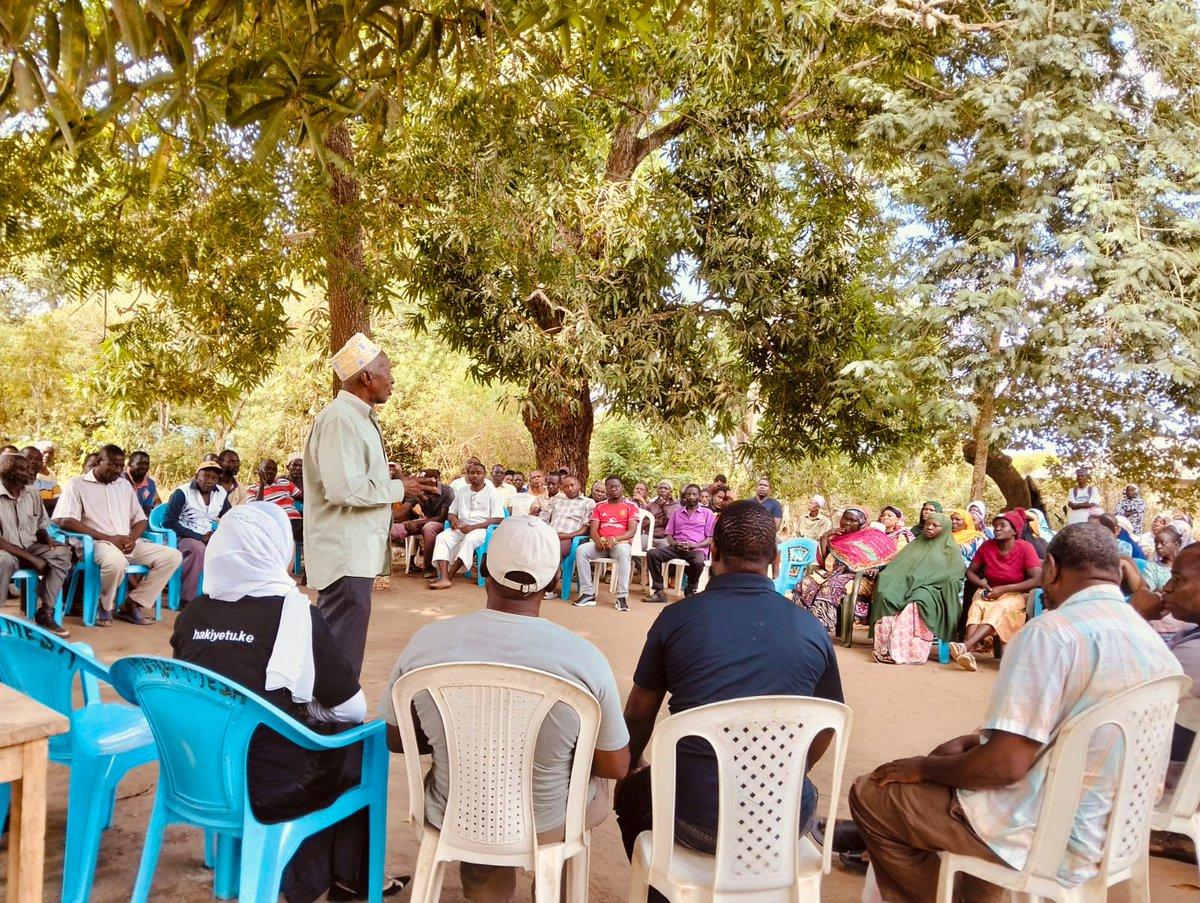
The visitors arrived a little after ten, in two white vehicles that stopped beneath the large tree where the community had been gathering since early morning. Chairs had been arranged in a half circle. Tea was waiting. Elders sat near the front, women with infants on their laps beside them, young men standing along the edges where there was shade.
The visitors were warm and well prepared. One unfolded a laptop; another handed out printed brochures. They spoke with evident care about a problem they had studied from a distance, and they set out their plan: the resources they had secured, the timeline, the results they expected within two years.
The community listened. Heads nodded. When the presentation ended, someone thanked the guests for coming, and someone else said the plan sounded promising. The visitors drove away believing they had been welcomed, and they had been.
Nobody had asked what the community had already tried. Nobody had asked which efforts had failed, or why. Nobody had asked who among them had been quietly working on the problem for years, or what the people sitting under that tree had learned from living inside it.
Later, as the chairs were being stacked, an older man remarked, almost to himself, that this was the third plan to arrive beneath that tree. He did not say what had become of the other two.
The question that was not asked
Imagine that one of the visitors had set down a brochure and asked, simply, what the community had tried before. There might have been a long pause. There might have been a story nobody expected to hear. Or there might have been polite silence, because trust is not given on request.
We cannot know. But the plan on the screen was already finished, and a finished plan has no room for an answer that might change it. The absence of questions is easy to miss. It looks like agreement.
Two kinds of listening
There is a kind of listening that leaves us open to being changed by what we hear. And there is a kind that waits for confirmation: nodding at what fits, setting aside what does not, and returning to the plan we arrived with. The second can be practised with great courtesy and sincere concern. But its purpose is to be reassured, not to understand.
When we listen only to confirm, people learn quickly what we hope to hear. They offer the answers that keep the conversation pleasant and the support flowing. And we leave certain that we understood, because no one contradicted us.
The quiet cost of good intentions
Few people who set out to help intend any harm, and that is what makes this so hard to see. A well-prepared solution can carry an unspoken message: we have worked out what is wrong, and we have come with the answer. Whatever the intention, those on the receiving end may hear that their knowledge does not count, that their years of endurance produced no insight, and that their role is to receive.
Dignity is rarely taken in a single moment. It is more often worn away by small assumptions: that we know and they do not, that our part is to give and theirs is to receive. Over time this erodes more than trust. It erodes a community’s confidence that its own judgement matters, and that its own efforts are worth building on.
When participation means endorsement
Many of us have sat in meetings called consultations where the decisions had effectively been made. People are invited to attend, to comment, to approve. Their names appear in the final report. Participation of that kind asks people to endorse, not to shape.
Participation that begins after the plan is finished is not participation. It is approval.
Real participation is slower and less comfortable. It begins before the plan exists. It risks hearing that our assumptions were wrong, that the problem is not quite the problem we thought, that what is needed is something other than what we have brought.
A different question
Ubuntu begins from a different place: I am because we are. A person becomes fully human through relationship with others, and shared humanity carries shared responsibility. If that is true, what changes when we approach a community not simply as beneficiaries, but as fellow human beings, with knowledge, with responsibility, and with something valuable to contribute?
Perhaps it changes the first question we ask. Perhaps it changes who speaks first, who we assume is the expert, and what we count as a resource. Perhaps it changes what we mean by success. It is a question we keep returning to at The Ubuntu Covenant, and one we do not claim to have answered.
This reflection offers no formula. There are no five steps to better listening, and the wish to help is nothing to be ashamed of. But it may be worth thinking of the last time we tried to help someone: who did we listen to before we decided what was needed, and what did we do with what we heard?
Before we ask what we can do for a community, have we taken enough time to discover what we might learn from them?
Leave a Reply