
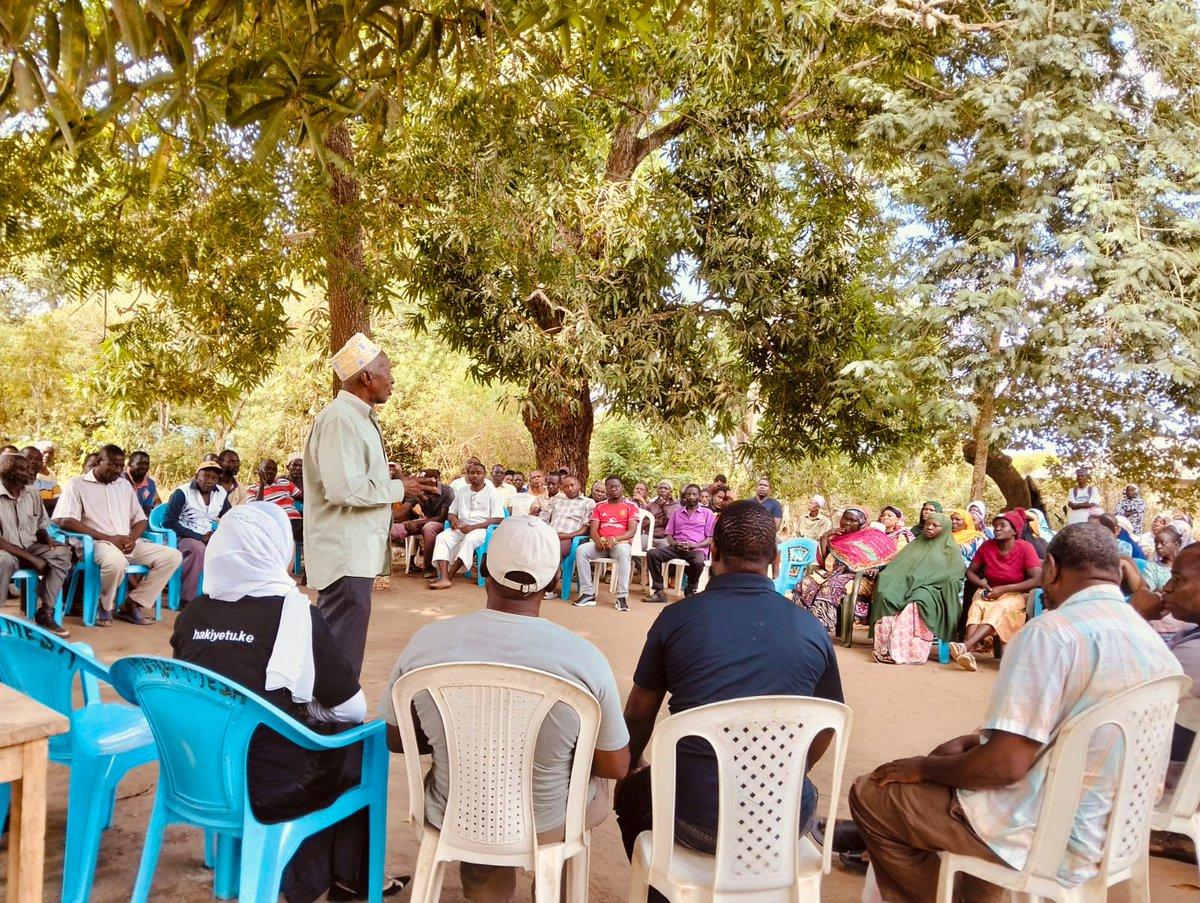
What allows development not only to begin, but to take root, earn trust and endure?
When a Good Project Is Not Enough
A community receives news of a promising development initiative.
The plans have been prepared.
Funding has been secured.
Technical assessments suggest that the project is viable.
The anticipated benefits are considerable.
There is every reason to believe that something worthwhile is about to begin.
Yet, as the project moves forward, questions emerge.
Some people wonder why particular decisions were made without their involvement.
Others worry about how the benefits will be shared.
A few raise concerns about land, livelihoods or responsibilities that have not been fully considered.
And some remain silent, uncertain whether their views would make any difference.
The project may still be technically sound. Its intended benefits may be genuine.
But something important is becoming visible.
A development initiative can have the resources required to begin without necessarily having the relationships, trust and shared understanding needed to endure.
What happens next may depend as much on how people are treated, heard and involved as on what the project promises to deliver.
What Might We Be Overlooking?
When we speak about development, we often speak about what can be built, financed, delivered or measured.
Roads.
Hospitals.
Water systems.
Agricultural investments.
Institutions and public services.
These are important expressions of development. They can improve lives, expand opportunities and address urgent needs.
But beneath them are questions that cannot always be answered through technical plans or financial projections.
Do people trust those making decisions?
Can affected communities meaningfully influence what happens?
Are responsibilities understood and shared?
Will institutions remain accountable when difficulties arise?
And who will care for what has been established when the initial investment or external support comes to an end?
These are not questions separate from development.
They concern the human conditions within which development takes place.
Ignoring them can weaken even a promising initiative. Taking them seriously can help create more legitimate, cooperative and sustainable outcomes.
This does not mean that trust or participation can substitute for technical competence, adequate financing, environmental safeguards or respect for the law.
It means that responsible development requires attention to both the systems we build and the human relationships through which they operate.
The Foundations Beneath Development
What makes people feel that they belong to a shared future?
What enables communities and institutions to cooperate despite differences?
What allows authority to be trusted, questioned and held accountable?
These questions point towards human foundations that are often less visible than buildings, budgets or infrastructure, but no less deserving of attention.
At The Ubuntu Covenant, our inquiry begins with six interconnected foundations:
Dignity and Belonging — recognising people’s humanity and their place within the communities affected by development.
Trust and Relationships — understanding the relationships through which confidence, cooperation and legitimacy develop.
Agency and Participation — recognising people’s capacity and right to contribute to decisions affecting their lives.
Cooperation and Shared Responsibility — exploring how communities and institutions can act together while recognising their different interests and responsibilities.
Accountability and Institutional Trust — examining how decisions, authority and commitments remain answerable to those they affect.
Stewardship and Continuity — considering how relationships, resources and shared achievements are cared for beyond the immediate life of a project.
These foundations are not independent of one another.
Participation without trust may become a formality.
Cooperation without accountability may prove fragile.
And development without stewardship may leave behind achievements that cannot be sustained.
They do not constitute an exhaustive explanation of responsible development. Nor are they offered as a substitute for established rights, professional standards or legal obligations.
They provide a starting point for understanding the human dimensions that influence how development is experienced, governed and sustained.
Read more about the six Human Foundations on our About vpage.
From Understanding to Responsible Practice
Recognising the importance of these foundations raises another question.
How can they be understood and strengthened in real development settings?
Consider a community preparing for a major investment.
Before asking only whether the project is financially and technically feasible, what might we learn by understanding existing relationships, sources of trust and mistrust, local knowledge and expectations?
Before deciding how communities should participate, what might we discover by asking how decisions are already made, whose voices are heard and whose concerns are overlooked?
Before establishing new structures, what might we learn about the institutions and forms of cooperation that people already rely upon?
And before declaring a project complete, how might we understand who is prepared and able to sustain its benefits and responsibilities?
These questions require more than consultation conducted to satisfy a procedural requirement.
They require genuine listening, careful inquiry and a willingness to reconsider assumptions.
They also require recognising that communities are not simply recipients of decisions made elsewhere.
People possess knowledge of their circumstances, histories of cooperation and conflict, and legitimate expectations concerning their future.
Responsible development should create meaningful opportunities for that knowledge and agency to influence decisions, rather than simply seek acceptance of decisions already made.
An Emerging Practice Within The Ubuntu Covenant
It is from these questions that The Ubuntu Covenant is beginning to develop The Human Foundations of Responsible Development as a specialised area of inquiry and practical learning.
This work grows from our wider concern with the human conditions without which development, institutions, peace and community life weaken.
Our approach remains grounded in three interconnected principles:
Ubuntu — Shared Humanity
Recognising the dignity, belonging and interdependence of people.
Harambee — Shared Responsibility
Understanding how people and institutions can cooperate, contribute and act together.
Stewardship — A Shared Future
Encouraging responsibility for relationships, resources, institutions and opportunities entrusted to present and future generations.
These principles inform how we approach development.
Our six Human Foundations provide the areas through which we examine its human dimensions.
Together, they offer a basis for learning how responsible development can be supported in different community and institutional settings.
We are not presenting this emerging practice as a completed methodology or established consultancy service.
Its value must be developed through careful inquiry, relevant research, practical experience and honest assessment of what works, what does not and why.
How We Are Beginning
We believe that a responsible approach to this work should begin with understanding rather than ready-made solutions.
Our initial direction involves four connected commitments.
Listening before prescribing
Seeking to understand how communities experience development, make decisions, cooperate and respond to the institutions affecting their lives.
Learning from evidence and experience
Examining research and practical examples to understand where human relationships, participation and accountability have influenced development processes and outcomes.
Exploring practical applications
Working, where appropriate, with willing communities and relevant partners to examine how these foundations might inform development decisions, institutional relationships and shared responsibilities.
Reflecting, testing and improving
Documenting what is learned, acknowledging limitations and refining our approach before making wider claims about its effectiveness.
We recognise that this work requires more than good intentions.
Meaningful participation, the protection of rights, safeguarding, technical expertise and responsible institutional conduct must remain central to any practical engagement.
The aim is not to replace existing development disciplines, but to learn how greater attention to human foundations may complement and strengthen them.
What Are We Building Upon?
A road may connect two places.
But what connects the people and institutions responsible for deciding where it goes, how it is used and who benefits?
A water project may bring an essential resource closer to a community.
But what helps people cooperate over its management, resolve disagreements and protect it for future use?
An agricultural investment may create new opportunities.
But what allows farmers and other affected people to participate meaningfully in decisions that shape their livelihoods?
These questions remind us that development has both visible and less visible dimensions.
We can see the infrastructure.
We can measure the investment.
We can assess the services delivered.
But we must also pay attention to the dignity, relationships, trust, responsibilities and institutional practices that influence what those achievements mean in people’s lives.
What we build matters.
How we build it, with whom, and under whose responsibility matters too.
An Invitation to Think and Learn Together
The Human Foundations of Responsible Development is an emerging area of work within The Ubuntu Covenant.
We welcome thoughtful exchange with communities, researchers, development practitioners, public institutions and organisations interested in these questions.
Not because we presume to possess answers that others lack.
But because responsible development benefits from bringing different forms of knowledge, experience and responsibility into meaningful conversation.
Our starting question remains:
What human conditions make development responsible, legitimate and lasting—and how might we learn to strengthen them together?
That is a question worth pursuing carefully.
And a conversation worth beginning.
The Ubuntu Covenant
Shared Humanity. Shared Responsibility. A Shared Future.
Ubuntu → Harambee → Stewardship